Gumdan Ewha Hospital · Dermatology, Pain Relief & International Patient Concierge in Incheon
4.9 Patient Satisfaction
en-US


Medical Guide
Tired of Dark Spots? Try This Triple-Action Pigmentation Protocol
Fade dark spots fast with this triple-action pigmentation protocol. Brighten, even tone, and restore radiance—your clear skin journey starts here!
Schedule a ConsultationIntroduction

In Korea, where radiant skin is more than a beauty standard — it’s a reflection of health, youth, and self-care — dark spots can feel especially frustrating. Every day, patients walk into our dermatology department at Gumdan Ewha Hospital asking the same question: "Why won’t my pigmentation go away, no matter what I use?"
They’ve tried everything: luxury serums from department stores, viral skincare trends, homemade masks passed down through family, and even expensive clinic treatments that didn’t work because they weren’t tailored. Some patients come to us hiding under layers of concealer; others have avoided social events for years. Hyperpigmentation isn’t just a cosmetic issue — it’s a skin condition rooted in complex biological pathways. And to treat it effectively, we have to look deeper than the surface.
That’s why we developed the Triple-Action Pigmentation Protocol — a multi-step, medically grounded treatment system tailored to each individual. It’s built around a simple truth: fading dark spots takes more than surface-level solutions. You need a plan that regulates pigment at its source, helps the skin repair existing damage, and prevents future spots from returning.
Whether you're struggling with sun damage, melasma, or stubborn acne scars, our approach is designed to give you not only clearer skin, but a clearer path forward.
Understanding the Root: What Causes Pigmentation?
Hyperpigmentation, or dark spots, occur when certain areas of the skin produce too much melanin — the pigment that gives our skin its color. This overproduction is usually triggered by a mix of factors:
UV radiation: The biggest culprit, especially in sun-exposed countries like Korea. Even short exposure without protection can stimulate melanin overdrive.
Hormonal changes: Often seen in melasma, triggered by pregnancy, birth control pills, or thyroid disorders.
Inflammation: Acne, eczema, or even harsh skincare can leave behind PIH (post-inflammatory hyperpigmentation).
Aging: Over time, the skin’s ability to regulate pigment weakens, leading to sunspots and uneven tone.
Genetics: Some individuals, especially those with deeper skin tones, are more prone to melanin overreaction.
These triggers may act alone or together. For example, a woman might develop melasma due to hormonal shifts, but see it worsen dramatically after summer vacations. A teen’s acne scars might linger as dark marks for months due to sun exposure and improper skin barrier care.
Why Most Treatments Fail: The Surface-Only Mistake
It’s common to think that pigmentation can be erased with just a cream. But while brightening serums or acid-based exfoliants might help a little, they often only target the top layer of skin — the epidermis — while much of the pigment sits deeper in the dermis or is actively being produced underneath.
Moreover, many over-the-counter treatments are either too weak or too irritating. Aggressive exfoliation can actually trigger more inflammation, causing a vicious cycle where the skin darkens further in response to damage.
In our clinic, we often see patients whose skin has become sensitized after months of incorrect treatment. Their barrier is compromised, their melanocytes are overactive, and they feel like nothing works anymore. That’s why the right approach must be multi-layered, medically supervised, and customized — not just a “skin brightening” cream from a shelf.
The Triple-Action Protocol: Gumdan Ewha’s Signature Approach

Based on thousands of patient cases and the latest dermatological research, we’ve refined a three-pronged method that addresses pigmentation holistically:
1. Melanin Regulation: Calming the Source
The first step is calming the root cause — melanocyte overactivity.
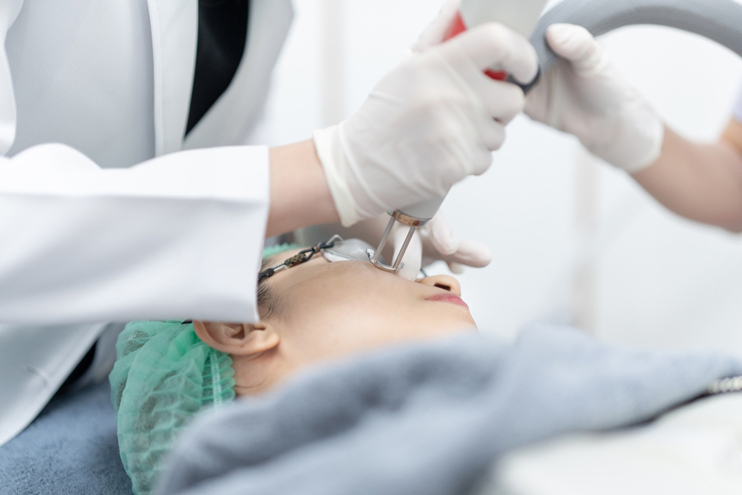
Medical Lasers: At Gumdan Ewha Hospital, we use advanced platforms like picosecond lasers, IPL (Intense Pulsed Light), and fractional lasers, depending on pigmentation depth. These devices break apart melanin deposits and reduce melanocyte activity without harming healthy tissue. They also stimulate collagen, helping with overall skin clarity and resilience.
Topical Melanin Inhibitors: Under prescription, we use agents like tranexamic acid, azelaic acid, kojic acid, and sometimes hydroquinone. These slow the enzyme (tyrosinase) that drives melanin production, reducing both current and future spots. Unlike off-the-shelf versions, our compounds are tailored to skin type and condition.
Oral Supplements: In select cases, oral tranexamic acid or antioxidant-rich formulations can support internal pigment regulation, especially for melasma patients.
2. Cellular Renewal & Repair: Clearing What’s Left
Once melanin overproduction is under control, we help your skin shed pigmented cells and repair underlying damage.
Tailored Peels: Unlike harsh, one-size-fits-all peels, we design gentle exfoliants that accelerate turnover without triggering inflammation. For example, mandelic acid works well for sensitive skin, while glycolic acid penetrates deeper for sun damage.
Microneedling with Growth Factors: This technique creates micro-channels in the skin, allowing regenerative serums — rich in peptides, stem cell factors, and antioxidants — to penetrate deeply. This enhances cell communication, collagen formation, and pigment breakdown.
Rejuvenation Boosters: We often incorporate skin boosters like PN (polynucleotides), exosomes, or hyaluronic acid injections to restore dermal health, improve glow, and support an even tone.
This phase turns reactive skin into a proactive repair machine.
3. Protection & Prevention: Locking In Results
The final — and often most overlooked — step is preventing pigmentation from recurring.
Daily Broad-Spectrum SPF: We counsel patients to apply SPF 50+ every day, rain or shine. Sunscreen isn’t just for summer; UV damage accumulates even during a quick walk to the store. We recommend formulas suited to skin type (e.g., physical sunscreens for sensitive skin).
Barrier Strengthening: Using gentle, non-irritating moisturizers that support the skin’s lipid layer is critical. A strong barrier reduces inflammation and helps the skin fend off triggers.
Routine Maintenance: Pigmentation-prone skin needs regular check-ins. Some patients benefit from quarterly laser refreshers or continued topical maintenance.
We also educate each patient on their specific triggers — heat, hormonal changes, or friction (like mask-wearing) — and how to manage them.
Who This Protocol Is For?
This method benefits a wide range of patients:
Women dealing with melasma from pregnancy or hormonal shifts
Adults noticing age spots or dullness from sun damage
Teens or young adults with PIH after acne breakouts
Patients with sensitive or darker skin tones prone to pigmentation
By treating the individual, not just the symptom, we’ve helped thousands of people regain not only brighter skin — but a better relationship with their appearance.
How Long Does It Take to See Results?

Realistically, pigmentation doesn’t vanish overnight. Most patients see visible improvement in 4–6 weeks, with optimal outcomes around 8–12 weeks depending on pigmentation type and depth. With consistent care and maintenance, long-term clarity is achievable.
We focus not just on speed, but sustainability. After all, what good is fast fading if the spots come back just as quickly?
At Gumdan Ewha Hospital, You’re Not Just a Skin Type — You’re a Story
Located in the heart of Seo-gu, Incheon, our hospital isn’t a beauty clinic — it’s a medical sanctuary where dermatology, aesthetics, and internal medicine converge. We offer:
Over 2,000 successful pigmentation cases treated
Fully private treatment rooms and premium post-care options
State-of-the-art equipment, including next-gen lasers and regenerative boosters
A personalized, relationship-driven experience led by Dr. Soojin Do, who brings Gangnam-level aesthetic expertise to Incheon families
We believe that clear skin isn’t just about appearance — it’s about freedom, confidence, and self-expression.
Conclusion
Dark spots don’t have to be permanent. With the right approach, they can be addressed at the source — and your skin can finally begin to heal. Our method is rooted in science, backed by experience, and led with compassion.
If you’re tired of temporary fixes and want lasting clarity, Gumdan Ewha Hospital is here to help. We understand that pigmentation isn’t just a visual concern — it’s something that affects how you feel every day. That’s why our team works closely with you, offering expert guidance and a safe, personalized path to clearer, brighter skin.
You deserve to feel confident in your own skin — without filters, without hiding. With our Triple-Action Pigmentation Protocol, we’ll help you get there.
More Articles
Continue reading our clinical guides and insights.
Pico Fraxel vs. CO2 Laser: Which Laser Treatment Is Best for Scars & Wrinkles?
Discover the differences between Pico Fraxel and CO2 laser treatments for scars and wrinkles. Find out which is best for your skin. Learn more today!
Learn More

Garlic IV for Inflammation: What Patients Say After One Session
Discover how Garlic IV therapy helps reduce inflammation and boost wellness. Read real patient experiences and results after just one session. Learn more!
Learn More

Should You Get a Detox IV After Travel or Illness?
Recover faster and rehydrate your body with a Detox IV after travel or illness. Flush out toxins, boost energy, and feel your best again—book your session today!
Learn More