Gumdan Ewha Hospital · Dermatology, Pain Relief & International Patient Concierge in Incheon
4.9 Patient Satisfaction
en-US

Medical Guide
CO2 Laser: Still the Gold Standard for Skin Resurfacing?
CO2 Laser remains the gold standard for skin resurfacing, offering unmatched results and recovery. Discover benefits, risks & expert insights — learn more now!
Schedule a ConsultationIntroduction — Why CO₂ Laser Still Deserves a Closer Look in 2025
If you’ve been researching skin rejuvenation treatments, chances are you’ve come across a wide array of options: radiofrequency microneedling, picosecond lasers, non-ablative toning, hydrafacials — and of course, CO₂ laser resurfacing.
Some patients come into my office saying, “I heard CO₂ is too harsh,” while others whisper, “Is that the laser that really works?”
Here’s the honest truth: In an era filled with low-downtime beauty treatments, CO₂ laser often gets labeled as “too aggressive” or “old-school.” But in clinical reality — especially in cases of deeper wrinkles, acne scars, or significant texture issues — CO₂ remains one of the most powerful and transformative tools available.
At Gumdan Ewha Hospital in Incheon, where we specialize in both regenerative and aesthetic dermatology, we use CO₂ laser not because of tradition, but because of its unmatched ability to stimulate true collagen remodeling and structural skin renewal. And with today’s advanced fractional delivery systems, we can do this with more safety, precision, and comfort than ever before.
In this article, I’ll walk you through what CO₂ laser actually does, how it compares to newer technologies, who benefits most, and what to expect — from healing to results. Whether you’re in your 30s dealing with lingering acne scars, or in your 50s hoping to turn back the clock on photoaging, understanding the role of CO₂ laser in 2025 can help you make a truly informed decision.
What CO₂ Laser Resurfacing Really Is?
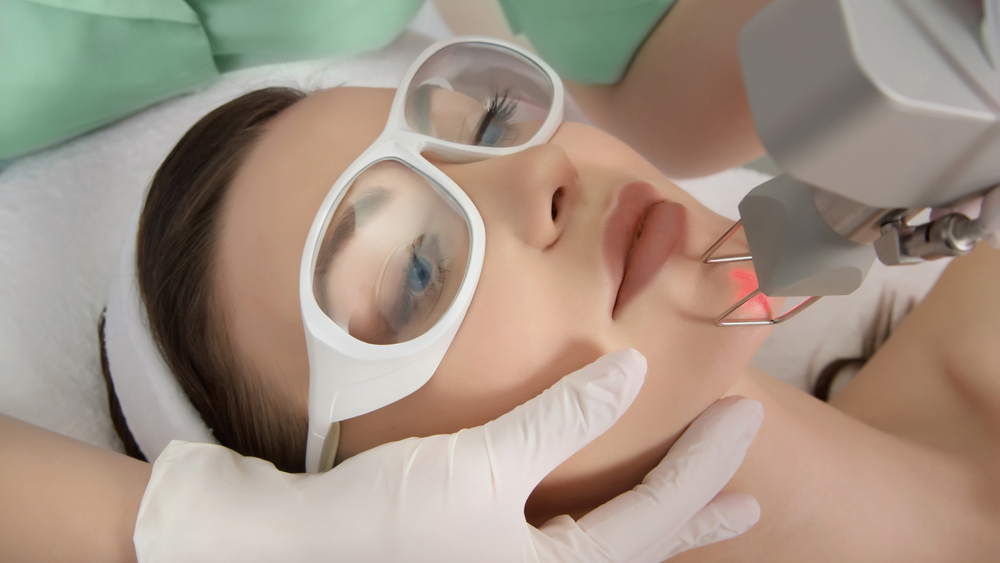
CO₂ (carbon dioxide) laser is an ablative laser — meaning it physically removes layers of skin while delivering energy that stimulates deep biological healing.
Here’s a way I often explain it to patients:
Think of your skin like a road. Non‑ablative treatments are like repaving potholes; ablative CO₂ resurfacing is like grinding down to the foundation and rebuilding the surface properly.
CO₂ wavelengths are strongly absorbed by water — and since skin is mostly water, that means the laser energy is converted into precise heat. This heat vaporizes microscopic columns of skin (controlled injury), which might sound alarming but is exactly what triggers the body’s deep healing response.
This differs from:
Non‑ablative lasers: which heat tissue without removing it — gentler, less recovery, but less depth.
Fractional technologies: which create tiny treated zones surrounded by untouched skin — speeding healing.
Modern CO₂ systems often use fractional delivery, bridging power with safety. We’ll unpack that evolution shortly.
The Deep Tissue Impact: Collagen Remodeling
What makes CO₂ laser unique isn’t just surface smoothing — it’s collagen stimulation at depth.
Collagen is the structural protein that gives skin firmness and resilience. As we age — and with sun damage — collagen breaks down. Surface treatments can brighten and smooth minor texture, but they don’t rebuild the deep matrix.
CO₂ creates controlled micro‑injuries that trigger:
Fibroblast activation
New collagen and elastin synthesis
Improved skin thickness and strength
Gradual tightening over months
This is why many patients describe not just “fresh” skin after CO₂ resurfacing, but firmer, more structurally reshaped skin.
Why CO₂ Gained Its “Gold Standard” Reputation?
Let’s talk honestly: the phrase “gold standard” gets thrown around a lot in marketing. But in dermatologic science, CO₂ earned that label because historically it delivered results that alternatives couldn’t:
1. Deep, Structural Change
CO₂ doesn’t just heat superficial tissue — it remodels dermal collagen.
2. Versatility
From moderate wrinkles and photodamage to acne scars and textural irregularities, CO₂ covered many indications.
3. Durability
Results tend to mature and last longer than non‑ablative modalities.
4. Strong Evidence Base
CO₂ resurfacing has decades of clinical research supporting efficacy in aging skin and scar revision.
But legacy alone isn’t enough — what matters is whether it still stands up today, with many new technologies emerging.
Modern Laser Landscape — How CO₂ Fits Today
Since the early days of ablative lasers, technology has progressed significantly. Let’s compare the landscape:
Ablative CO₂ Laser
Mechanism: Tissue vaporization + deep thermal remodeling
Outcome: Significant improvement in deep wrinkles, texture, and scars
Downtime: Moderate to significant (5–10+ days)
Risk: Higher than non‑ablative methods, especially without expert technique
Fractional CO₂ Laser
Mechanism: Microcolumns of ablation with intact surrounding skin
Outcome: Strong results, shorter healing
Downtime: Moderate (less than traditional CO₂)
Why it matters: This evolution keeps CO₂ relevant — you still get depth without overwhelming recovery.
Non‑Ablative Lasers
Mechanism: Heating without tissue removal
Outcome: Mild‑to‑moderate improvement, safer for more skin types
Downtime: Minimal
Best for: Early aging, maintenance, low‑downtime lifestyles
RF Microneedling
Mechanism: Needles + radiofrequency heat
Outcome: Good collagen stimulation, less aggressive than CO₂
Downtime: Low–moderate
Each has its place. CO₂ remains distinguished because no non‑ablative or RF system matches its depth of remodeling in a single or few treatments.
Who Benefits Most from CO₂ Resurfacing?
The right candidate is key. CO₂ isn’t always the first choice — but in the right context, it’s often the best choice.
Best Candidates
Moderate‑to‑deep wrinkles
Indented acne scars
Significant photodamage and textural irregularity
Thicker skin types that tolerate deeper energy
Patients ready for meaningful change and willing to commit to recovery
Less Ideal Candidates
Fitzpatrick IV–VI skin (higher risk of pigmentation changes — though with tailored settings some can still be treated safely)
Active inflammatory skin conditions (e.g., eczema, rosacea flare)
Unrealistic expectations
Recent isotretinoin use (requires safe waiting period)
At Gumdan Ewha Hospital, we take individualized assessment seriously — not every wrinkle or scar is the same, and setup matters.
What Results Really Look Like — Expectations vs Reality
Here’s a question I always ask:
“Are you looking for a subtle glow or structural transformation?”
CO₂ delivers structural transformation — and here’s what that typically looks like:
Immediate to 1 Week
Redness, swelling
Peeling and crusting
Discomfort (manageable with proper care)
1–4 Weeks
Smoother surface
Gradual improvement in texture
Redness fading into pinkness
1–3 Months
Collagen remodeling peaks
Noticeable tightening
Lasting smoothness and lifted quality
Unlike non‑ablative treatments, which often show more subtle change in multiple sessions, CO₂ can produce remarkable improvement with fewer sessions — but with more intense recovery.
For acne scars, we often plan two to three fractional CO₂ treatments spaced 4–6 weeks apart. Each builds on the last.
For aging skin, even a single treatment can create a visible difference — but many patients choose series approaches or combination plans for optimal results.
Side Effects and Safety — What To Know

No powerful therapy is without risk — but with expert technique and proper aftercare, complications can be minimized.
Common, Expected Effects
Redness
Swelling
Peeling and crusting
Less Common Effects
Prolonged redness
Pigment changes (hyper‑ or hypo‑pigmentation)
Infection
Milia formation
These are rare when patients follow aftercare protocols and when the treatment is tailored properly.
Aftercare is not optional. Sun protection, gentle cleansing, hydration, and avoiding irritants are essential. At Gumdan Ewha, we provide detailed aftercare guidance and follow‑ups to ensure comfort and safety.
Combination Strategies — When CO₂ Is Not Alone
One of the smartest ways to use CO₂ is in combination approaches:
CO₂ + Non‑ablative Laser: Depth plus maintenance
CO₂ + RF Microneedling: Structural remodeling plus tightening
CO₂ + PRP (Platelet‑Rich Plasma): Healing support
Combination strategies tailor results while balancing recovery — particularly valuable for patients with multiple concerns (texture + laxity + pigmentation).
Conclusion — So, Is CO₂ Laser Still the Gold Standard?
In the world of skin rejuvenation, trends come and go. But some treatments earn their place not through hype, but through results.
CO₂ laser resurfacing, especially in its modern fractional form, remains one of the few technologies that can deeply restructure the skin, not just superficially enhance it. It's not for everyone, and it's not always the first choice — but for the right patient, with the right concerns, and in the hands of the right physician, it can offer profound and lasting transformation.
At Gumdan Ewha Hospital, we don’t believe in one-size-fits-all treatment. We believe in precision-based medicine, guided by your goals, your lifestyle, and your skin’s unique profile. That’s why CO₂ resurfacing, while powerful, is never used casually — it’s applied thoughtfully, customized to your needs, and supported with attentive aftercare.
More Articles
Continue reading our clinical guides and insights.
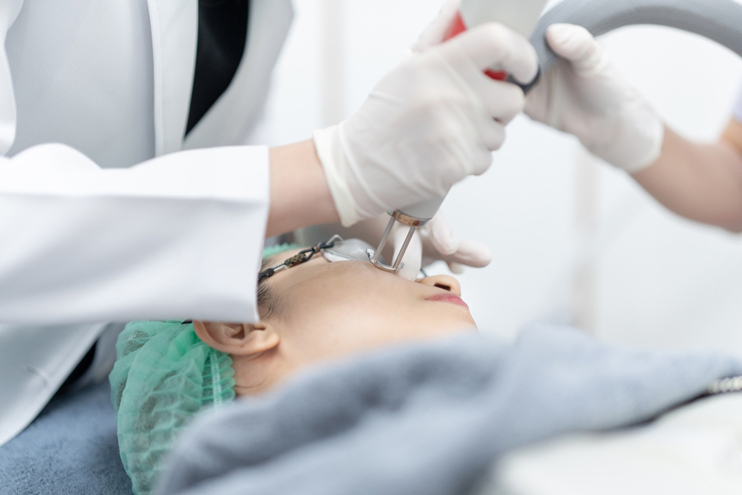
Pico Fraxel vs. CO2 Laser: Which Laser Treatment Is Best for Scars & Wrinkles?
Discover the differences between Pico Fraxel and CO2 laser treatments for scars and wrinkles. Find out which is best for your skin. Learn more today!
Learn More

Garlic IV for Inflammation: What Patients Say After One Session
Discover how Garlic IV therapy helps reduce inflammation and boost wellness. Read real patient experiences and results after just one session. Learn more!
Learn More

Should You Get a Detox IV After Travel or Illness?
Recover faster and rehydrate your body with a Detox IV after travel or illness. Flush out toxins, boost energy, and feel your best again—book your session today!
Learn More