Gumdan Ewha Hospital · Dermatology, Pain Relief & International Patient Concierge in Incheon
4.9 Patient Satisfaction
en-US


Medical Guide
Avoid Overdone Fillers: How to Get Subtle, Natural Volume
Discover how to get subtle, natural volume without overdone fillers. Learn expert tips for achieving balanced, refreshed results that enhance your features.
Schedule a ConsultationIntroduction

It often begins quietly.
A patient sits down for a consultation, touches their cheek or under-eye area, and pauses before speaking. “I look tired,” they say, “but I don’t want to look fake.” Others hesitate longer before admitting, “I’ve seen too many people whose faces changed. I don’t want that to happen to me.”
This hesitation is not vanity—it is caution. And in today’s aesthetic environment, it is completely understandable.
In Korea, beauty ideals have long emphasized balance, restraint, and harmony rather than dramatic transformation. A refreshed face is admired; an obviously altered one often feels uncomfortable, both for the person themselves and for those around them. Many patients would rather accept signs of fatigue or aging than risk looking artificial.
Social media has intensified this fear. Highly edited before-and-after images, viral examples of overfilled faces, and one-size-fits-all beauty trends have blurred the line between medical treatment and cosmetic excess. Patients are left wondering: Is subtle improvement even possible anymore?
At Gumdan Ewha Hospital, this concern is one of the most common reasons patients delay or avoid filler treatments altogether. We meet people who have spent months—or even years—thinking about treatment but never feeling confident enough to begin.
Understanding Facial Aging Before Talking About Fillers
Many patients jump straight to asking, “How much filler do I need?” But from a medical standpoint, this is the wrong starting point.
Facial aging is not simply about wrinkles appearing on the surface. It is a slow, layered process involving bone resorption, fat pad atrophy and descent, ligament weakening, muscle compensation, and skin thinning. These changes do not happen evenly, and they do not happen at the same speed for everyone.
In our clinical experience at Gumdan Ewha Hospital, this is where misunderstandings often begin. Patients may focus on a single line or hollow, without realizing it is the downstream effect of deeper structural changes.
For example, sunken nasolabial folds are rarely just a fold problem. They are often the result of midface volume loss and weakened support. Filling the fold directly—without restoring structure—can easily lead to heaviness around the mouth.
This is why subtle, natural filler results always begin with an understanding of why the face has changed, not just where it looks tired.
Why Do Fillers Sometimes Look Overdone?
Many patients assume that filler results depend mainly on the product used. While product choice matters, it is only a small part of the equation.
From a clinical perspective, overfilled results usually come from three main issues.
Treating Faces Like Flat Surfaces
Faces are not canvases. They are living structures made of bone, fat pads, muscles, ligaments, and skin—each aging at a different pace.
When fillers are injected without understanding this three-dimensional structure, volume is often placed too superficially or in the wrong layer. This leads to puffiness, heaviness, or the well-known “pillow face.”
Many patients don’t realize this, but where the filler is placed is often more important than how much is used.
Chasing Trends Instead of Balance
High cheekbones. Plump lips. Sharp jawlines.
Trends change quickly, but faces do not.
When treatments are driven by social media aesthetics rather than individual facial proportions, the result can feel unnatural—especially over time. A face that looks dramatic in photos may feel heavy, stiff, or unfamiliar in real life.
At Gumdan Ewha, we often tell patients: “Your face should still look like you—just more rested.”
Repeated Treatments Without a Long-Term Plan
Another hidden cause of overdone fillers is accumulation.
Patients may receive small amounts over several years, often from different clinics, without dissolving or reassessing existing filler. Over time, this can distort natural contours—even if each individual session seemed conservative.
This is why a long-term facial plan matters just as much as today’s treatment.
What Does “Natural Volume” Actually Mean?
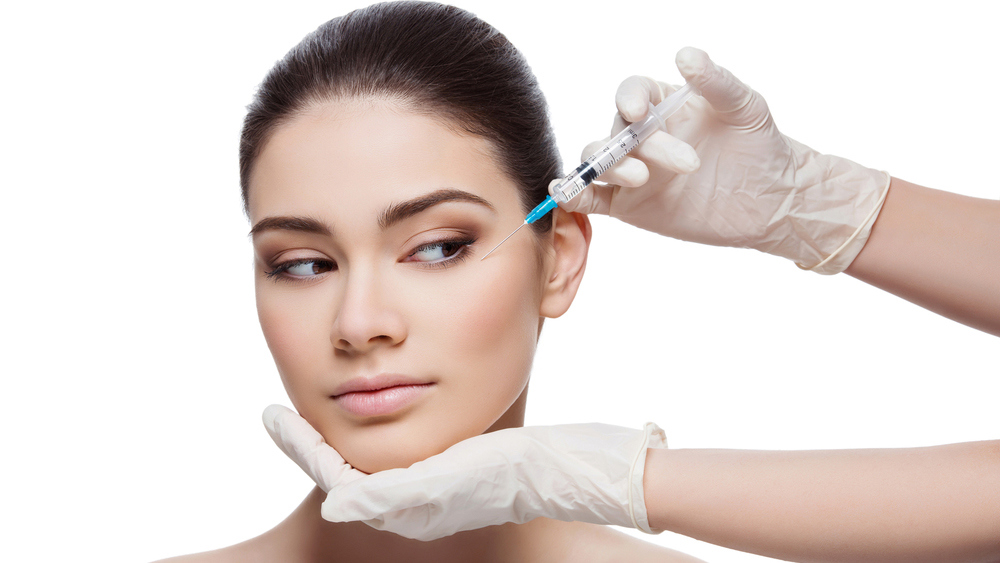
Many patients ask for “natural results,” but few stop to define what that actually means.
From a medical perspective, natural volume is not about making the face fuller. It is about restoring support so the face can return to a healthier version of itself.
A useful analogy we often share with patients is this: fillers should act like reinforcing beams, not padding. When support is placed correctly, the outer appearance improves without needing excess material.
Natural Does Not Mean No Change
One common misconception is that natural results mean nothing noticeable happens. In reality, well-done fillers are noticeable—but in a quiet way.
Patients may hear comments like:
“You look well-rested.”
“Did you lose weight?”
“You look brighter somehow.”
What they don’t hear is: “What did you do to your face?”
That difference is the essence of natural volume.
Aging Gracefully, Not Reversing Time
Another important point many patients don’t realize is that filler treatments should respect age.
A 45-year-old should not aim to look 25. When fillers are used to chase a past version of the face, overcorrection becomes almost inevitable.
At Gumdan Ewha, our goal is not to erase age—but to help patients look like a healthier, more balanced version of themselves at their current stage of life.
Many patients ask for “natural results,” but few stop to define what that means.
Clinically speaking, natural volume does not mean adding fullness everywhere. It means restoring structural support in the right places so the face moves, rests, and ages naturally.
Think of it like maintaining a house.
If the foundation weakens, adding decoration on top won’t help. Prolotherapy patients often understand this analogy instantly—and facial rejuvenation follows the same principle.
Volume Loss Is Not Uniform
As we age, volume loss occurs primarily in:
The deep fat compartments of the cheeks
The temples
Around the eyes
Along the jawline
At the same time, some areas may retain or even gain volume due to skin laxity and gravity.
This is why simply “filling wrinkles” often fails. Wrinkles are symptoms, not the root cause.
Subtle Volume Works With Movement
A well-done filler treatment should allow the face to:
Smile naturally
Show emotion
Look soft at rest
If a face looks smooth but stiff, volume has been placed incorrectly—or in excess.
At Gumdan Ewha Hospital, we assess facial movement just as carefully as facial shape before planning any filler treatment.
How Experienced Doctors Prevent Overfilling?
Avoiding overdone fillers is not about being conservative—it’s about being precise.
Under the guidance of Dr. Soojin Do, filler treatments at Gumdan Ewha follow a medical framework rooted in anatomy, balance, and restraint.
Step 1: Structural Assessment Before Aesthetic Decisions
Before any syringe is opened, we evaluate:
Bone structure
Fat pad descent
Muscle activity
Skin thickness and elasticity
Existing filler (if any)
Many patients are surprised to learn that their concern—such as nasolabial folds—may actually require cheek or midface support rather than direct filling.
Step 2: Choosing the Right Filler for the Right Layer
Not all fillers behave the same.
Some are designed for deep structural support, while others are meant for superficial refinement. Using a soft filler too deep—or a firm filler too shallow—can easily lead to unnatural results.
This is why experienced clinicians select fillers based on function, not marketing.
Step 3: Less Volume, Better Placement
One of the most counterintuitive truths in aesthetic medicine is this:
Smaller amounts, placed correctly, often create better results than larger volumes.
In many cases, half a syringe in the right anatomical plane can achieve what multiple syringes cannot.
Patients often say afterward, “I don’t look different—but everyone says I look healthier.”
That is the goal.
The Role of Regenerative Medicine in Natural Results

One reason fillers are sometimes overused is that they are asked to do too much.
At Gumdan Ewha Hospital, we often combine fillers with regenerative treatments to reduce the need for volume altogether.
Skin Boosters and Stem Cell-Based Therapies
Rather than pushing the skin outward, regenerative treatments improve:
Skin density
Elasticity
Natural collagen production
Patients who undergo stem cell rejuvenation or advanced skin boosters often require significantly less filler—and their results last longer with better texture.
Many don’t realize that improving skin quality can restore a youthful appearance without changing facial shape at all.
A Final Thought from the Clinic
Asking for subtle results is not hesitation—it is wisdom.
Fillers are powerful medical tools. When used with precision and restraint, they can restore structure, soften fatigue, and help patients feel comfortable again in their own reflection. When used excessively, or without a clear long-term plan, they can create heaviness, stiffness, and emotional regret.
Many patients who visit Gumdan Ewha Hospital express the same wish in different words: “I don’t want to look younger than I am. I just want to look like myself again.”
That intention matters more than any trend.
Under the guidance of Dr. Soojin Do, our approach to fillers is rooted firmly in medicine. We begin by understanding how the face has changed over time, how it is likely to continue aging, and what kind of support—not volume—it truly needs. Sometimes that means using filler. Sometimes it means using less than expected. And sometimes it means choosing regenerative or skin-quality treatments instead.
This approach often includes:
Precise placement rather than large volumes
Respecting age and natural facial movement
Avoiding unnecessary repetition and accumulation
Saying no when more filler would compromise balance
Subtle filler work is not about doing less for the sake of caution. It is about doing only what is necessary, with intention and care.
If you are considering fillers but feel uneasy about looking overdone, trust that concern. The right medical team will listen carefully, explain clearly, and guide you thoughtfully—without pressure.
More Articles
Continue reading our clinical guides and insights.
Pico Fraxel vs. CO2 Laser: Which Laser Treatment Is Best for Scars & Wrinkles?
Discover the differences between Pico Fraxel and CO2 laser treatments for scars and wrinkles. Find out which is best for your skin. Learn more today!
Learn More

Garlic IV for Inflammation: What Patients Say After One Session
Discover how Garlic IV therapy helps reduce inflammation and boost wellness. Read real patient experiences and results after just one session. Learn more!
Learn More

Should You Get a Detox IV After Travel or Illness?
Recover faster and rehydrate your body with a Detox IV after travel or illness. Flush out toxins, boost energy, and feel your best again—book your session today!
Learn More